Gated Villa Communities in Whitefield: What to Look for Before You Buy
Introduction
Buying a villa in a gated community is not the same decision as buying a flat. With a flat, the building is already done — you’re mostly choosing a floor, a view, and a price. With a villa, especially in a large township project, what you’re really buying is a promise. A promise about how the roads inside will hold up in the third year. How the clubhouse will actually be managed once 200 families move in. Whether the green spaces in the brochure will still look like that after construction is finished.
Whitefield and its eastern fringes — Devangondi, Budigere Cross, Hoskote corridor — have seen a surge of gated villa community launches over the last three years. Some of them are genuinely well-planned projects from developers with a track record. Others are using “gated villa community” as marketing language for what is essentially a plotted layout with a boundary wall and a guardroom.
Knowing how to tell these apart before you put down a booking amount can save you from years of frustration and a significant amount of money.
This article is not about any single project. It’s a practical guide to the questions, checks, and site visit observations that separate buyers who are happy with their purchase from those who aren’t.
1. Start With the Developer, Not the Project
The single biggest predictor of whether your villa community will turn out the way the brochure shows is the developer — not the location, not the amenities list, not the price per square foot.
This sounds obvious. But most buyers do it the other way around. They see a project advertised, they like the location and the price, they visit the site, they get excited about the show flat — and then they ask about the developer almost as an afterthought.
Reverse that sequence.
Before you spend a Sunday driving to a site visit, spend an afternoon on the developer’s history.
What to find out:
How many projects have they delivered in Bangalore — not launched, delivered. A developer can have 20 ongoing projects and zero completions. That’s not a track record; that’s a pipeline.
Visit at least one completed project in person. Not the sales office — the actual residential areas where families are living. Walk the internal roads. Look at whether the landscape plantings have been maintained or are dead and scraggly. Check if the amenities that were promised are functional or locked up. Ask a resident near the gate what’s working and what isn’t.
Check if there are any consumer forums or RERA complaints against the developer. Karnataka RERA’s portal has a grievance section — use it. One or two complaints over a decade of operations is normal. A pattern of delays, possession-certificate disputes, or unfinished common areas is not.
SSP Group, for context, has delivered 16+ projects over 14 years with over 1,000 families in their completed communities. When we say that, we’re not asking you to take our word for it — we’re telling you the number because you should be asking every developer you meet the same question.
2. RERA Registration: Verify It Yourself, Don’t Just Accept the Number
Every legitimate residential villa project above 500 square meters or 8 units in Karnataka must be registered with Karnataka RERA. This is not optional. If a developer claims their project doesn’t need RERA registration, walk away.
But here’s the issue: RERA numbers get used loosely in sales conversations. A developer might quote a RERA number that exists but doesn’t match the specific phase or layout you’re buying into. Or a number that was obtained but the filed documents show a different unit count or completion date than what’s being marketed.
What to actually do:
Go to rera.karnataka.gov.in. Search for the project by name or the RERA number the developer gave you. Look at the filed documents — specifically the layout plan, the developer’s disclosure form, and the project timeline.
Check whether the RERA-filed completion date matches what the sales team tells you. If the RERA document says December 2027 but the salesperson is promising possession in early 2027, ask them to explain the discrepancy in writing.
Check how many units are filed. If the brochure says 221 villas but the RERA filing shows 200, ask why. Sometimes there are legitimate reasons. Sometimes there aren’t.
This takes 20 minutes. Most buyers skip it. The ones who don’t skip it almost never end up in possession disputes.
3. Land Title and Conversion — The Part Most Buyers Underweight
In Bangalore’s peripheral areas — which is where most of Whitefield’s eastern villa corridor sits — land often starts life as agricultural. Before a residential project can legally be built and sold, the land must go through a conversion process: DC conversion (District Collector conversion) from agricultural to residential use, followed by NA (Non-Agricultural) certificate.
This process is supposed to happen before a project is launched and before bookings are taken. In practice, some developers launch with conversion in process, relying on buyer’s money to fund the timeline.
What to look for:
Ask the developer for the DC conversion order and the NA certificate for the specific survey number of the plot you’re buying. Not a photocopy in a brochure — the original or a copy you can verify with the DC office or on the Bhoomi portal.
Check the Encumbrance Certificate (EC) for the land. This shows all registered transactions and mortgages on that specific survey number going back decades. An EC with multiple mortgage entries, or one that shows the land was recently sold multiple times in a short period, warrants closer scrutiny.
If the project is within BBMP limits, check whether it’s A-Khata or B-Khata. A-Khata properties are properly registered with BBMP and can receive building plan approval and occupancy certificates. B-Khata properties cannot — which creates long-term complications for resale and getting utilities connected.
If the project is in a panchayat limit (which most Whitefield-east corridor projects are), confirm that the layout plan has been approved by the relevant authority — Hoskote Taluk Panchayat in the case of Devangondi-area projects.
None of this is meant to scare you off buying in these zones. Most legitimate developers have clean titles. The point is that verifying it protects you from the minority of cases where they don’t.
4. The Physical Site Visit: What to Actually Look at
A site visit to a launch-stage project is a controlled experience. The developer has put their best face forward — a show flat, a well-groomed entry gate, a scale model with miniature trees that are more lush than any actual sapling will ever be. That’s fine. It’s marketing.
What you want to do is look past the controlled experience and observe the actual site.
Walk the full perimeter if you can. How the boundary is defined, whether there’s a service road between the project boundary and the STRR or NH adjacent to it, where the project physically ends and what it borders — these are details you’ll care about once you’re living there.
Look at the elevation of the site. In a wide-open agricultural land context, it’s not always obvious, but low-lying areas are flood risk areas. Ask the developer for an elevation survey. In east Bangalore’s flat topography, even a half-metre elevation difference can matter during monsoon.
Check what’s adjacent to the project on all four sides. North-facing view of 700-acre forest reserve is a very different living experience from south-facing view of an industrial plot. What’s to the east and west matters for the units along those edges. The site model will usually show “open space” on the borders — ask specifically what that open space is and whether it’s protected.
Ask where the utilities are coming from. Water supply, Bescom power connection, sewage treatment — these are the unglamorous questions that determine daily living quality. A project with its own sewage treatment plant and a dedicated borewell or BWSSB connection is better positioned than one relying entirely on tanker water.
Look at the internal road width. BDA norms require certain minimum road widths for residential layouts. A 9-metre internal road versus a 6-metre one sounds like a minor difference until you have 200 families trying to navigate it on a Saturday evening.
5. Clubhouse and Amenities: The Gap Between Brochure and Reality
The clubhouse has become the most heavily marketed feature in Indian villa community projects over the last decade. Every project now has a “grand clubhouse” with a gym, swimming pool, multipurpose hall, indoor games, and so on. The numbers have become large enough to be almost meaningless without context.
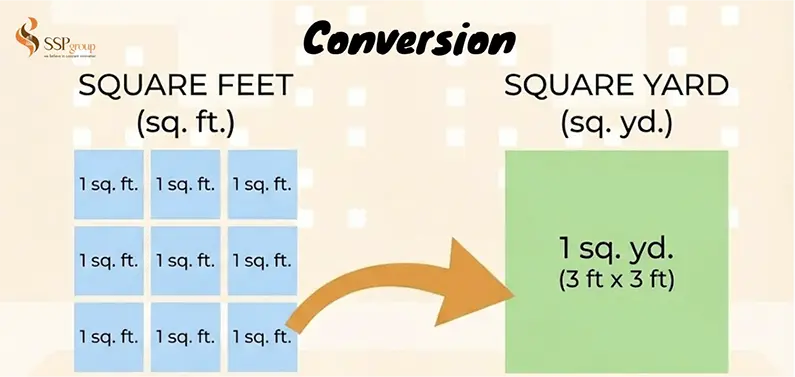
A 38,000 sq.ft. clubhouse serving 221 families is a very different proposition from a 5,000 sq.ft. clubhouse marketed to the same number of families as “grand.” Do the math when you’re comparing projects.
What to actually evaluate:
What is the clubhouse square footage per unit? Divide the clubhouse size by the number of residential units. For a project with 221 villas and a 38,000+ sq.ft. clubhouse, that’s roughly 170 sq.ft. of clubhouse space per family — that’s meaningful. For a project with 400 units and a 5,000 sq.ft. clubhouse, it’s 12.5 sq.ft. per family.
How many pools are there and what are the dimensions? A “swimming pool” can be a proper lap pool or a wading pool. Ask for dimensions.
Are the sports courts properly sized? A tennis court needs to be a certain size to actually play tennis on. A “cricket pitch” that’s 12 metres long is just a slab. Ask what standard the sports facilities meet.
Who will manage it post-possession? Amenities degrade when management isn’t organised. Ask whether the developer will hand over to a Resident Welfare Association (RWA) at a defined point, what the estimated maintenance charge per unit will be, and what it covers.
6. Layout Planning and Villa Configuration
How a township is planned — where the villas sit relative to the entry gate, the clubhouse, the internal roads, and each other — affects how you’ll live in it every day.
Density matters. 221 villas on 25 acres is roughly 8.8 villas per acre — that’s reasonably low density for a gated community. Projects with 40+ villas per acre are far more cramped regardless of how the common areas look.
Distance from the main road. Villas immediately adjacent to the boundary wall along a busy road have noise and privacy downsides. If the project is adjacent to an NH or STRR service road, ask specifically about the setback and the boundary treatment — a tree buffer and compound wall combination is very different from a bare boundary wall.
G+2 vs G+1. A villa at G+2 (ground plus two floors) gives you significantly more internal space than a G+1 villa on the same plot footprint. But it also means more stairs and more maintenance. Think about your actual household — young children and elderly parents make G+2 less convenient than the extra bedroom count suggests.
Villa type facing and orientation. In Bangalore, east and north-facing homes are traditionally preferred. In a villa community where units are organised in rows, interior units face each other across the road rather than open space. Ask for the exact survey or villa number you’re being offered and check it on the layout plan — not all units are equal in a large township.
7. Pricing and Payment Plans: Read the Fine Print
Villa pricing in Whitefield’s eastern corridor is currently in a range where buyers need to read the payment schedule carefully, not just the headline price.
Base price vs all-in price. The price per sq.ft. that gets advertised is usually the base price. On top of it comes: Preferential Location Charges (PLC) for corner units, park-facing units, or specific floors; car park charges; clubhouse corpus; maintenance deposit; GST; stamp duty and registration; and legal/documentation charges. The all-in cost can be 12–20% above the base price depending on the project.
Construction-linked plan vs time-linked plan. A construction-linked payment plan (where you pay as milestones are achieved — foundation, slab, brickwork, etc.) is safer for the buyer than a time-linked plan (where you pay on calendar dates regardless of construction progress). With RERA, both formats are legal — but construction-linked keeps the developer accountable because they only receive funds when they’ve built.
Subvention schemes. Some developers offer schemes where the developer services your loan EMI for a period. These can look attractive but are worth scrutinising — if the developer’s cash flow tightens, they may stop servicing those EMIs, leaving you suddenly responsible for payments you hadn’t planned for.
8. Connectivity and Daily Commute: Test It, Don’t Assume It
Every project in Whitefield’s eastern corridor will describe its connectivity using the best possible scenario — typically off-peak hours on a clear day. What you need to know is what the commute actually looks like on a Tuesday morning at 8:45am.
Do the drive yourself, at commute time. From the project site to your actual office. Not Google Maps estimate — the actual drive, at the actual time you’d leave in the morning. This is the single most under-done piece of due diligence for buyers in peripheral locations.
Check for planned infrastructure on the route. Is there a road widening project that’s been announced but not started? Are there at-grade railway crossings that create backups during school drop-off hours? These don’t show on real estate brochures.
Think about non-work travel. Your commute to the office matters, but so does getting to a good hospital at 11pm, getting your children to school, doing a weekend grocery run. How far is the nearest decent hospital from the project? Where is the nearest school with availability for your children’s age group? These questions should be answered before booking, not after.
Frequently Asked Questions
Q. What is the average price of a gated villa community in Whitefield in 2026?
Pricing varies significantly based on location, developer, and configuration. Villa communities in Whitefield’s established zones — within 5 km of ITPL — command a premium. Projects in the eastern corridor near STRR (Devangondi, Budigere Cross, Hoskote fringe) offer comparable quality at lower base prices, reflecting the infrastructure discount that tends to close as road projects complete. For specific pricing, the most accurate approach is to contact developers of RERA-registered projects directly.
Q. How do I verify if a villa project in Whitefield is RERA registered?
Visit rera.karnataka.gov.in and search by project name or the RERA number the developer provides. Review the filed layout plan, completion date, and developer disclosures. This takes under 20 minutes and is the most important check any buyer can do before making a booking payment.
Q. What is a good clubhouse size for a villa community?
A useful benchmark is clubhouse area per unit. Divide the total clubhouse square footage by the number of residential units. Communities that offer 100+ sq.ft. of clubhouse space per unit are well-served. Below 30 sq.ft. per unit, most amenities will feel crowded once the project is fully occupied.
Q. What is the difference between A-Khata and B-Khata properties in Bangalore?
A-Khata properties are properly registered with BBMP and can receive building plan approval and occupancy certificates, which are required for utility connections and legal resale. B-Khata properties have not been regularised and face long-term complications. Most serious developers in the Whitefield corridor operate in A-Khata zones — always confirm before booking.
Q. What should I check on a site visit to a villa community?
Beyond the show flat, check: full site boundary and what surrounds it, elevation of the site (flood risk), internal road widths, source and capacity of utilities (water, power, sewage), and actual distance and road condition from the site to your workplace and nearest hospital. Do this on a weekday, not a weekend.
Q. Is G+2 better than G+1 for a villa?
G+2 gives more total floor area on the same plot footprint, which improves space efficiency. G+1 is easier for households with elderly residents or very young children. The right choice depends on your household’s age profile and lifestyle. In terms of resale, G+2 villas in well-designed communities tend to command higher absolute values because of the additional area.
Q. How much do villa maintenance charges typically run in Whitefield-area gated communities? Maintenance charges vary by project based on amenities offered and community size. Well-run communities with extensive amenities (large clubhouse, sports courts, landscape maintenance) typically run higher monthly charges. Ask for the developer’s projected maintenance estimate per unit and what it covers — this should be disclosed in the RERA filing.
Conclusion
Buying a villa in a gated community around Whitefield is one of the larger financial decisions most families make. It’s also a decision that compounds — a well-chosen community in a well-located project builds wealth over time, while a poorly evaluated one creates stress and illiquid capital.
The checklist in this article isn’t exhaustive — every project has its own nuances and every buyer has a different set of priorities. But the fundamentals stay the same: start with the developer, verify the RERA filing yourself, check the land title independently, visit the site at the right time of day, and read the full payment schedule before you sign.
The Whitefield eastern corridor — particularly projects near the STRR with natural surroundings and credible developers — offers the best combination of livability and long-term appreciation available in Bangalore’s villa market right now. But within that corridor, the quality difference between projects is real and it’s significant.
Spend time on due diligence. It’s far cheaper than fixing a bad decision later.
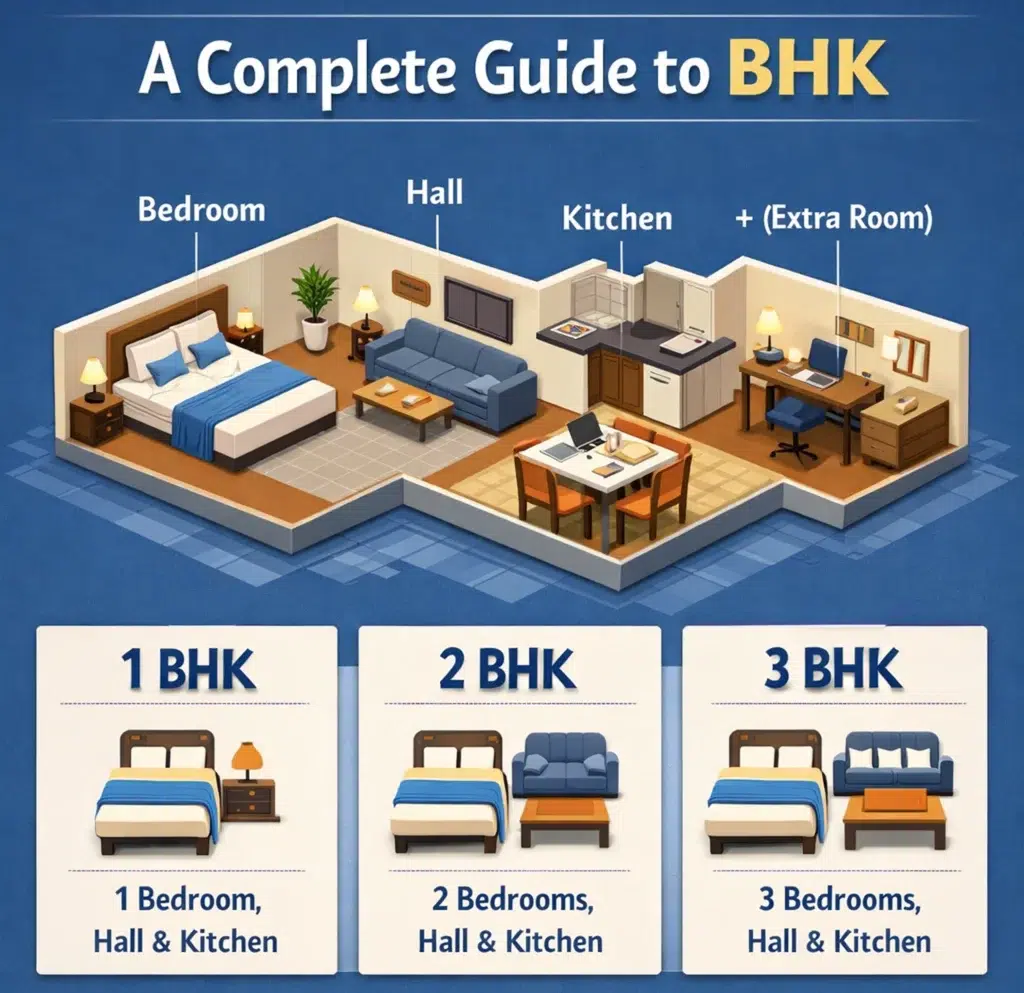
Written by [Author Name], Real Estate Analyst — SSP Group To schedule a site visit to AR Belle Vie, our RERA-approved 4 & 5 BHK villa community near Devangondi-Whitefield: call +91 9019223355 or visit sspgroup.org.in